1 April, 2026
Category
upwork-proposal-writing-tips
Author
Kyrylo Kozak
Upwork Proposal Writing Tips: Win More Projects in 2026
Your Upwork proposal is the gateway to every project you'll ever win on the platform. In 2026, with competition fiercer than ever, the difference between a 2% conversion rate and a 20% conversion rate isn't just talent - it's how well you communicate that talent in your proposal. Whether you're a solo freelancer or an agency submitting dozens of proposals daily, mastering the art of proposal writing directly impacts your revenue, client quality, and long-term success. This comprehensive guide breaks down the proven upwork proposal writing tips that separate top earners from those struggling to land their first client.
Why Your Proposal Strategy Determines Your Success Rate
The statistics tell a compelling story about why upwork proposal writing tips matter so much. Most job posts on Upwork receive between 20 to 50 proposals within the first 24 hours. Premium clients posting high-value projects often see 100+ applications. Your proposal needs to stand out immediately, or it becomes invisible.
Win rates vary dramatically based on proposal quality:
- Generic, templated proposals: 1-3% conversion rate
- Personalized but basic proposals: 5-8% conversion rate
- Strategic, well-crafted proposals: 15-25% conversion rate
- Optimized proposals from experienced freelancers: 25-35% conversion rate
These numbers reveal that improving your proposal writing can multiply your income without working more hours. If you're currently converting at 5% and improve to 20%, you'll quadruple your client base with the same effort.
The Economics of Better Proposals
Time investment matters. Writing a thoughtful, customized proposal takes 15-30 minutes. If you're submitting 10 proposals weekly at a 5% conversion rate, you land one client every two weeks. Improve to 20%, and you're booking four clients from the same ten proposals.
Every bid costs connects per proposal — typically 4–15 Upwork Connects at $0.15 each. A higher conversion rate means fewer Connects wasted, which compounds fast at volume.
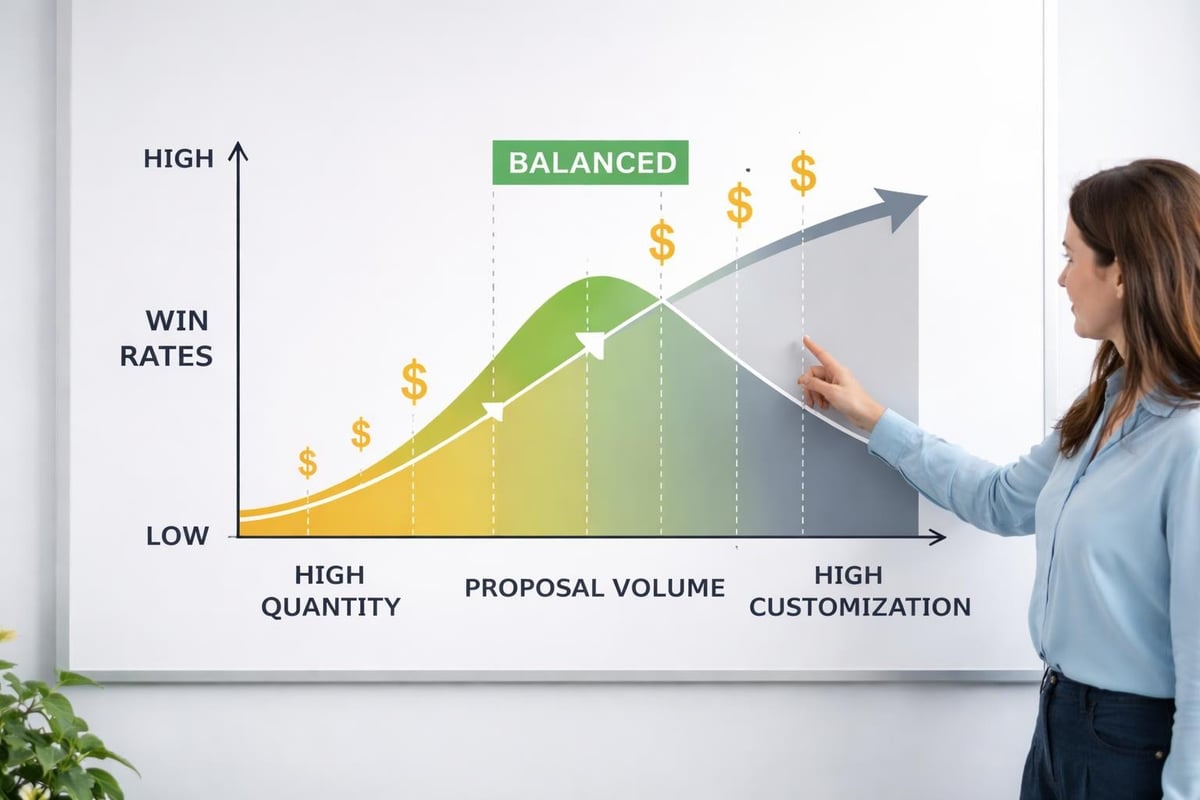
The math gets even more interesting when you consider proposal volume versus quality. Some agencies submit 30-50 proposals daily using automation tools that maintain personalization while scaling their output. The key is maintaining quality while increasing quantity strategically.
Core Upwork Proposal Writing Tips That Drive Results
Start With a Hook That Demonstrates Understanding
Your opening sentence determines whether clients read the rest of your proposal. This is one of the most important upwork proposal writing tips: skip the "I'm excited about this opportunity" template.
Weak opening: "Hi, I saw your job post and I'm very interested. I have 5 years of experience in web development."
Strong opening: "Your checkout page is losing 40% of customers at payment - I've solved this exact issue for three e-commerce brands by optimizing the payment flow and reducing form fields."
The difference is specificity. The strong opening shows you read the job post, identified the core problem, and have relevant experience. You've earned their attention in one sentence.
Address Their Pain Points Before Your Qualifications
Clients don't hire you because of your credentials. They hire you because they believe you'll solve their problem. Structure your proposal to address their needs first, credentials second.
Effective pain-point addressing framework:
- Identify the specific challenge from their job post
- Acknowledge why this problem matters to their business
- Outline your approach to solving it
- Then mention relevant credentials that support your approach
For example: "Your SaaS dashboard needs to handle 10x more users without performance degradation. This scaling challenge typically impacts customer retention and upgrade rates. I'd approach this by implementing caching layers and optimizing database queries - the same strategy I used to help [Client Name] scale from 5,000 to 50,000 users."
This framework works because it mirrors how clients think. They start with their problem, not your resume.
Personalize Beyond the Client's Name
Real personalization means demonstrating you've researched their business, understood their context, and tailored your approach. According to proven proposal strategies from successful freelancers, personalization is the single biggest differentiator in winning proposals.
Personalization tactics that work:
- Reference specific details from their job post (technologies, deadlines, challenges)
- Mention their company name, website, or product if provided
- Address their industry-specific challenges
- Acknowledge their timeline and budget constraints
- Note any complementary work they might need
Example: "I noticed VendorHub is built on React - perfect, since I specialize in React optimization. Your Q2 launch deadline is tight but achievable if we start with the payment integration first."
Integrate Portfolio Evidence Strategically
Don't just list your portfolio links. Connect each relevant project to their specific needs. This contextual presentation dramatically increases the impact of your past work.
Generic Approach | Strategic Approach |
|---|---|
"Here's my portfolio: [link]" | "Here's a similar e-commerce site I optimized: [link]. I increased their conversion rate from 2.1% to 4.3% by redesigning the product pages." |
"I've done 50 websites" | "I've completed three projects in the healthcare space: [specific examples with results]" |
Portfolio at the end | Relevant portfolio examples woven throughout |
When you tie portfolio pieces to specific client needs, you're not just showing work - you're demonstrating pattern-matching ability that builds confidence.
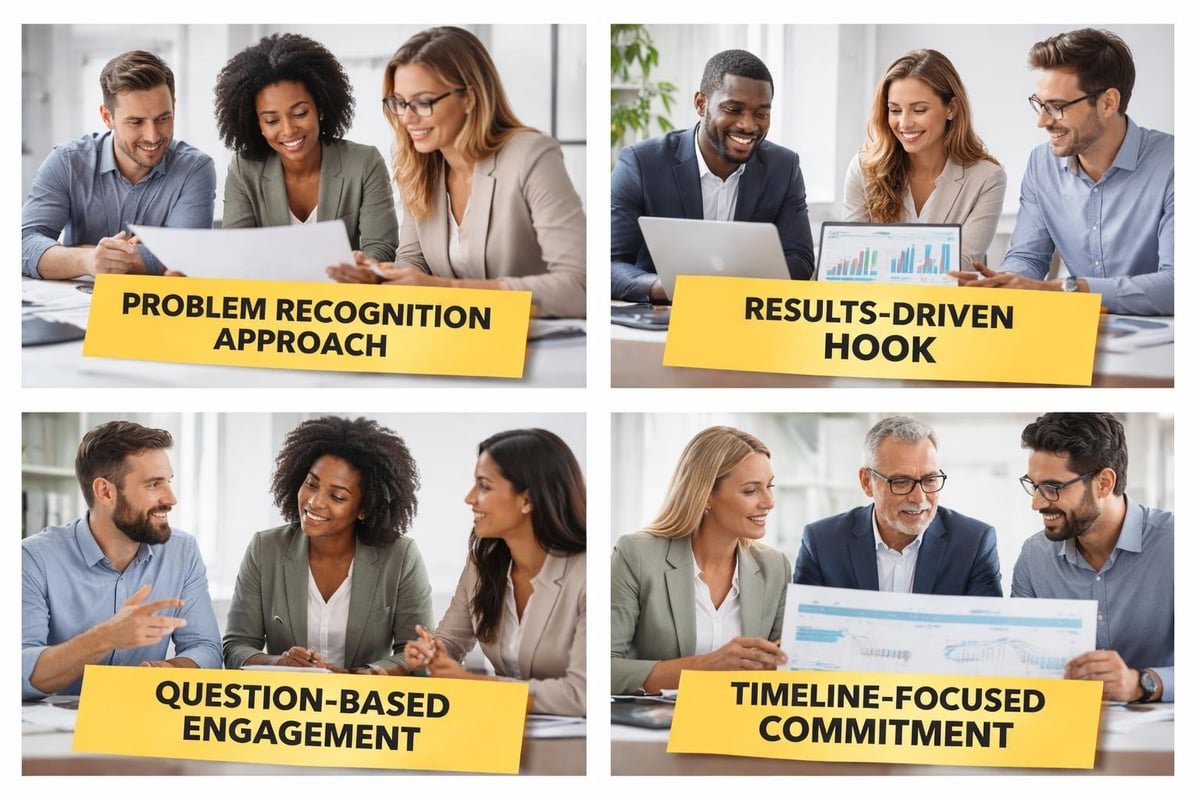
Master the Opening Hook Variations
Different projects require different hooks. Having multiple proven opening styles lets you match your approach to the project type.
The Results Hook: "I increased email open rates by 47% for a SaaS company in your industry. Here's how I'd apply the same strategy to your campaign."
The Problem-Recognition Hook: "Migrating 10 years of customer data without downtime is complex - one error could impact 50,000 users. I've handled three similar migrations without data loss."
The Question Hook: "Have you considered implementing progressive web app features? Your mobile traffic is 60% of visits, and PWA could increase engagement by 30-40%."
The Timeline Hook: "Your 3-week deadline for MVP launch is aggressive but achievable. I'd prioritize core features first: authentication, dashboard, and payment integration."
Advanced Upwork Proposal Writing Tips for Higher Conversion
Price Strategically Based on Project Signals
Your pricing strategy communicates value positioning. Price too low, and experienced clients question your quality. Price too high without justification, and you're filtered out.
Pricing strategy matrix:
- Budget-conscious clients: Match their stated budget, emphasize efficiency and value delivery
- Quality-focused clients: Price at market rate or higher, emphasize expertise and outcomes
- Unclear budget clients: Provide a range with justification for each tier
- Rush projects: Premium pricing (20-50% higher) for tight deadlines
Always explain your pricing in terms of value delivered. "My rate is $75/hour because I typically complete projects 30% faster than industry average, meaning lower total cost despite higher hourly rates." For additional market rate data to inform your pricing strategy, consult industry resources like the U.S. Bureau of Labor Statistics wage data
Optimize Proposal Timing and Speed
Understanding upwork proposal writing tips around timing is crucial: the first 5-10 proposals submitted to a new job post have significantly higher visibility and response rates.
Timing optimization strategies:
- Set up job alerts for your key search terms
- Check new job posts every 2-4 hours during business hours
- Have proposal templates ready for common project types
- Aim to submit within the first hour for high-value projects
However, rushing and submitting generic proposals backfires. This is where the balance between automation and personalization becomes critical for agencies handling volume.
Implement Strategic Follow-Up Systems
Most freelancers submit a proposal and forget about it. Top performers follow up strategically, increasing their visibility without being pushy.
Follow-up framework:
- 48 hours after submission: Brief follow-up asking if they need clarification on anything
- One week after submission: Share a relevant article or insight related to their project
- If job is reposted: Submit an updated proposal referencing your previous submission
Keep follow-ups valuable, not desperate. "I saw you're still interviewing candidates. I just completed a similar project and learned a new approach that might interest you: [brief insight]."
Test and Iterate Your Approach
The best upwork proposal writing tips come from analyzing your own data. Track what works for your specific niche and continuously improve.
Metrics to track:
- Proposal submission to interview rate
- Interview to hire rate
- Overall conversion rate
- Response time from submission
- Conversion rates by proposal length
- Conversion rates by pricing approach
Create a simple spreadsheet tracking these metrics for each proposal. After 20-30 proposals, patterns emerge showing what resonates with your target clients.
Proposal Type | Submissions | Interviews | Hired | Conversion Rate |
|---|---|---|---|---|
Standard Template | 15 | 2 | 1 | 6.7% |
Industry-Specific | 12 | 5 | 3 | 25% |
Project-Focused | 18 | 7 | 4 | 22.2% |
This data reveals that industry-specific and project-focused proposals dramatically outperform generic templates - justifying the extra time investment.
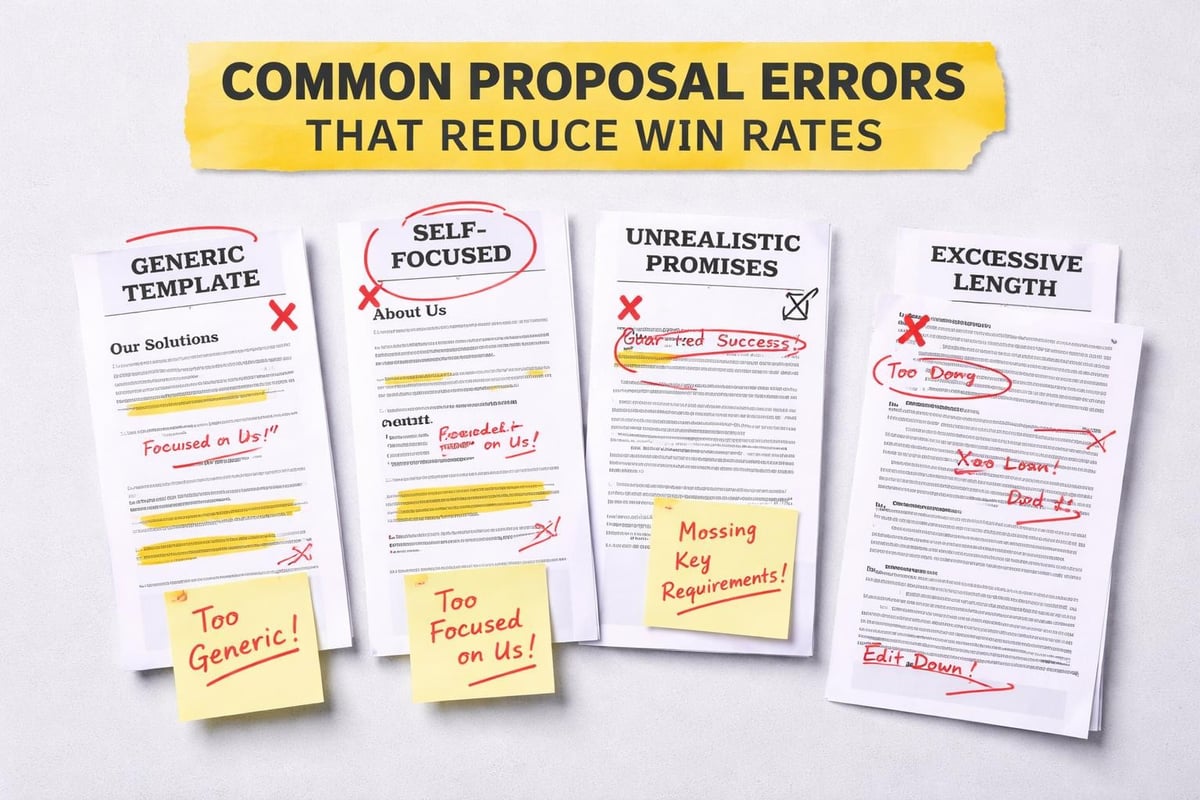
Common Proposal Mistakes That Kill Your Conversion Rate
Even when you follow upwork proposal writing tips perfectly, certain mistakes can sabotage your success. Avoid these common pitfalls:
The Generic Template Trap
Using identical proposals for different jobs is immediately obvious to clients. They receive dozens of proposals and can spot template language instantly.
Red flags that scream "template":
- "I'm perfect for this job" without explaining why
- Generic skills lists that don't match the project
- No reference to specific project details
- Copy-paste errors (wrong company name, mismatched details)
- Identical structure across all your proposals
Even when using templates as a starting point, customize at least 40-50% of the content for each project. According to research on winning proposal strategies, personalization is non-negotiable for competitive projects.
Talking About Yourself Instead of Their Needs
New freelancers often write proposals that read like resumes - focused entirely on their background, skills, and experience. Effective proposals flip this ratio.
Optimal proposal structure:
- 60% addressing client needs and your solution approach
- 25% relevant experience and credentials
- 15% logistics (timeline, pricing, process)
Your credentials matter, but only in context of solving their problem. Every sentence about you should connect to their project needs.
Over-Promising or Under-Delivering on Expectations
Desperate to win projects, some freelancers promise unrealistic outcomes or timelines. This strategy backfires through poor reviews, scope disputes, and damaged reputation.
Set realistic expectations:
- Be honest about timeline constraints
- Clarify what's included in your quoted price
- Acknowledge potential challenges upfront
- Under-promise and over-deliver, not the reverse
If a client wants a complex website in one week for $500, don't pretend it's possible. Either educate them on realistic expectations or decline the project.
Ignoring Instructions or Requirements
Job posts often include specific instructions like "Start your proposal with 'I read your requirements'" or "Include examples of similar work." Ignoring these instructions immediately disqualifies you.
These instructions serve two purposes: they filter out automated/lazy proposals, and they test whether you follow directions. Always comply with every stated requirement, no matter how arbitrary it seems.
Writing Novels Instead of Focused Proposals
Longer isn't better. Clients reviewing 50+ proposals won't read lengthy narratives. Aim for 150-300 words of high-impact content.
Structure for scannable proposals:
- Strong opening hook (1-2 sentences)
- Understanding of their needs (2-3 sentences)
- Your approach (3-4 sentences, bullet points work well)
- Relevant credentials (2-3 sentences with links)
- Clear next steps (1-2 sentences)
Use white space, short paragraphs, and occasional bullet points to improve readability. Dense text blocks get skimmed or ignored.
Proposal Templates and Frameworks That Work
The Problem-Solution-Proof Framework
This universal framework adapts to virtually any project type and consistently drives results.
Framework structure:
- Problem: "You need a mobile app that handles offline functionality for field workers in low-connectivity areas."
- Solution: "I'd build this using React Native with local storage sync, ensuring data capture even without internet, then syncing when connectivity returns."
- Proof: "I implemented this exact architecture for [Company Name], enabling their 200 field technicians to process 1,500 daily transactions offline."
- Process: "We'd start with a technical architecture review, then build a prototype within 10 days for testing."
- Credentials: "I've delivered 8 offline-first mobile apps over the past three years, all achieving 99.5%+ data accuracy."
The Results-First Template
For clients focused on outcomes, lead with results you've delivered for similar projects.
"I increased organic traffic by 340% for an e-commerce client in your industry. Here's how I'd replicate these results for your store:
- Comprehensive technical SEO audit identifying quick wins
- Content strategy targeting high-intent keywords in your niche
- Link building campaign focused on industry publications
- Monthly optimization based on performance data
This approach typically shows measurable results within 60-90 days. My background includes 6 years of SEO work, primarily in e-commerce verticals with budgets from $2,000-$20,000 monthly."
The Question-Based Engagement Template
Starting with relevant questions demonstrates expertise and engages clients in problem-solving conversation.
"A few questions about your WordPress site migration:
- Are you running any custom plugins that might have compatibility issues with the new host?
- Do you need zero downtime, or can we schedule a brief maintenance window?
- Should we implement performance optimizations during the migration?
I'm asking because I've completed 50+ WordPress migrations, and these factors significantly impact the approach and timeline. Based on your answers, I can provide a detailed migration plan with specific guarantees."
This template works particularly well for complex technical projects where clarification improves proposal accuracy.
Scaling Your Proposal Volume While Maintaining Quality
The Personalization at Scale Challenge
Individual freelancers can craft perfect custom proposals for 5-10 projects daily. Agencies targeting 30-50 proposals need different systems - this is where advanced upwork proposal writing tips around automation become essential, without sacrificing the personalization that drives results.
Scaling strategies:
- Create industry-specific templates (not project-specific)
- Build a library of reusable sections (credentials, process descriptions, case studies)
- Develop quick research processes (10-minute client website review checklist)
- Use tools that automate repetitive elements while preserving customization
The key is systematizing the research and writing process without creating obvious templates. When done well, each proposal feels custom even when built from modular components.
Leveraging Technology for Proposal Efficiency
In 2026, agencies managing high proposal volumes use technology to maintain quality while scaling output. GetMany's Cover Letter Builder demonstrates this perfectly: using [[double bracket]] instructions, agencies create templates once, then AI generates personalized proposals for each job based on client tone, project requirements, and portfolio relevance. This automation handles up to 850% of proposal creation work, enabling agencies to submit 30-50 personalized proposals daily instead of 5-10 manual ones.
Case Study: Cover Letter Builder GetMany's
Cover Letter Builder solves the personalization-at-scale problem using [[double bracket]] instructions. Instead of choosing between generic templates or 30-minute custom proposals, agencies write one template with smart instructions.
How it works:
- Write your proposal structure once
- Add [[instructions]] where you want AI personalization Example: [[reference their tech stack and explain your experience]]
- AI generates unique proposals for each job in 5-10 minutes
Results from 300+ agencies:
- 5-10 min per proposal (vs 30-60 min manual)
- 8-30% response rates (vs 2-5% for templates)
- 50+ proposals weekly without burnout
Pre-built templates (All-Purpose, Case Study Focused) let you start immediately, then refine based on your niche.
What automation handles effectively:
- Extracting key requirements from job posts
- Matching relevant portfolio pieces to project needs
- Generating personalized opening paragraphs based on client context
- Suggesting pricing based on project complexity and market rates
- Formatting proposals consistently
What still requires human input:
- Final personalization review
- Strategic pricing decisions for unique projects
- Complex technical proposal sections
- Relationship-building language for high-value opportunities
Agencies using automated systems report maintaining 8-30% response rates even at high volumes - far better than generic manual proposals at 2-5%. The automation handles repetitive work, freeing time for strategic customization on promising opportunities.
Building Proposal Systems and SOPs
Successful agencies document their proposal process to ensure consistency and enable team scaling.
Essential SOP components:
- Job evaluation criteria (which projects to pursue)
- Research checklist (client website, competitors, specific requirements)
- Proposal structure templates for each service category
- Approval process for pricing decisions
- Follow-up sequences and timing
- Performance tracking and optimization cycles
With clear SOPs, junior team members can handle routine proposals while senior staff focus on complex, high-value opportunities requiring deeper expertise.
Advanced Tactics for Competitive Markets
Differentiation Strategies When Skills Are Commoditized
In saturated niches like web development, graphic design, or writing, technical skills alone don't differentiate you. These advanced upwork proposal writing tips help you stand out when everyone claims similar capabilities.
Differentiation approaches:
- Specialization: "I exclusively work with dental practices, understanding HIPAA compliance and patient acquisition funnels."
- Process: "I use a proprietary 5-phase design process that guarantees approval by the third revision - my clients typically need 60% fewer revision rounds."
- Speed: "I deliver first drafts within 24 hours, giving you more time for feedback cycles before your deadline."
- Results guarantee: "If your email campaign doesn't achieve a 35%+ open rate, I'll revise it at no charge."
Choose one differentiation angle and emphasize it consistently across your proposals and profile.
Handling Price Objections Before They Arise
Many clients have budget constraints. Address pricing proactively in your proposal rather than waiting for objections during negotiation.
Pricing justification strategies:
"My rate is $95/hour, which is 20% above average for this type of work. Here's why clients find it valuable:
- I complete projects 30% faster due to specialized experience
- My first-draft quality means fewer revision cycles
- I provide detailed documentation, reducing future maintenance costs
- Total project cost typically comes in below cheaper alternatives due to efficiency"
This preemptive justification reduces price objections and positions you as a premium option worth the investment.
Creating Urgency Without Desperation
Subtle scarcity can motivate clients to respond faster without seeming pushy.
Appropriate urgency tactics:
- "I have availability starting March 15th - my next opening after that isn't until April."
- "I'm reviewing several project opportunities this week and typically commit to 2-3 clients monthly."
- "I can start immediately if we align by Friday; otherwise, my schedule fills up for the next three weeks."
Avoid desperate urgency like "I need work immediately" or "I can start right now!" These undermine your positioning as a sought-after professional.
Leveraging Social Proof and Credibility Indicators
Social proof dramatically increases conversion rates when integrated naturally into proposals.
Effective social proof elements:
- Specific client names (when allowed): "I designed the dashboard for TechCorp's internal analytics platform"
- Quantified results: "Averaged 4.98/5.00 rating across 47 completed projects"
- Industry recognition: "Featured in [Industry Publication] for innovative approach to [specific topic]"
- Relevant certifications: "Google Analytics certified and Facebook Blueprint certified"
Place social proof near your credentials section, connecting it to the client's specific needs.
Optimizing Proposals for Different Project Types
Fixed-Price vs. Hourly Proposals
Your proposal strategy should adjust based on contract type and client sophistication.
Fixed-price project proposals:
- Emphasize scope clarity and deliverables
- Break down the project into phases with milestones
- Address potential scope creep proactively
- Provide detailed timeline with specific dates
- Include payment structure (typically milestone-based)
Hourly project proposals:
- Focus on your process and communication style
- Explain how you track and report time
- Provide estimated hours for major tasks
- Emphasize flexibility and iteration
- Build trust around efficient time usage
Short-Term vs. Long-Term Engagement Approaches
Long-term projects require different positioning than quick one-off tasks.
Short-term project approach:
- Demonstrate you can deliver fast
- Show relevant portfolio pieces
- Provide clear timeline and deliverables
- Keep proposal concise and action-oriented
Long-term engagement approach:
- Emphasize reliability and communication
- Discuss your collaboration process
- Provide references or testimonials about working relationships
- Address how you handle ongoing optimization and improvements
- Explain your availability for regular check-ins
High-Budget vs. Low-Budget Project Strategies
Budget level signals client sophistication and expectations.
Project Budget | Proposal Strategy | Key Elements |
|---|---|---|
Under $500 | Brief, efficient, direct | Quick turnaround, clear deliverables, portfolio links |
$500-$2,000 | Balanced approach | Process explanation, relevant experience, timeline |
$2,000-$10,000 | Detailed strategy | Comprehensive approach, case studies, detailed methodology |
Over $10,000 | Consultative positioning | Strategic recommendations, risk mitigation, long-term value |
Higher budgets justify longer, more detailed proposals with strategic insights that demonstrate senior-level thinking.
Continuous Improvement Systems for Proposal Success
Creating a Proposal Performance Dashboard
Data-driven improvement requires tracking the right metrics consistently.
Essential tracking metrics:
- Weekly proposal submission count
- Interview request rate (by category, budget, project type)
- Interview to hire conversion rate
- Average time from submission to response
- Average project value won
- Connect usage per successful hire
- Proposal word count vs. success rate
Use a simple spreadsheet or CRM to log each proposal with these data points. After accumulating 30-50 proposals, analyze patterns to identify what works for your specific niche and approach.
A/B Testing Proposal Elements
Systematic testing reveals what resonates with your target clients better than intuition alone.
Elements to test:
- Opening hook styles (question vs. statement vs. result)
- Proposal length (150 words vs. 300 words vs. 500 words)
- Pricing presentation (hourly vs. fixed vs. packages)
- Portfolio placement (beginning vs. end vs. throughout)
- Call-to-action language
- Use of bullet points vs. paragraphs
Test one variable at a time, maintaining sample sizes of at least 10 proposals per variation for statistical relevance.
Learning From Competitors and Industry Leaders
Success leaves clues. Analyze what top performers in your niche are doing differently.
Competitive research tactics:
- Review profiles of freelancers with 95%+ Job Success Scores in your category
- Note how they structure their profile descriptions
- Identify common elements in their portfolio presentations
- Observe their pricing strategies and positioning
- Learn from their client review patterns
While you can't see competitor proposals, their public profiles reveal positioning and messaging strategies worth studying.
Seasonal Optimization and Market Adaptation
Client needs and competition levels fluctuate throughout the year. Adapt your proposal strategy accordingly.
Seasonal considerations:
- Q1 (January-March): High client volume post-budget allocation, more competition
- Q2 (April-June): Steady flow, mid-year project launches
- Q3 (July-September): Slower in August, ramps up in September
- Q4 (October-December): Rush projects before year-end, then December slowdown
During high-competition periods, increase personalization and follow-up efforts. During slow periods, adjust pricing or expand service offerings to capture different client segments.
Building Long-Term Success Beyond Individual Proposals
Converting Proposals Into Client Relationships
The best proposal strategy extends beyond winning the first project to building ongoing relationships.
Relationship-building elements to include:
- Express interest in understanding their broader business goals
- Mention potential future collaboration opportunities
- Provide value beyond the immediate project scope
- Follow up post-project with check-ins and insights
Repeat clients eliminate proposal competition and reduce acquisition costs dramatically. A client relationship worth $50,000 over three years starts with that first proposal.
Using Proposals to Build Your Upwork Reputation
Even rejected proposals contribute to long-term success when approached strategically.
Leveraging proposal activity:
- Each proposal improves your visibility in Upwork's search algorithm
- Consistent activity signals reliability to the platform
- Proposal interviews build your interview-to-hire ratio
- Client interactions (even without hiring) can lead to future opportunities
Treat every proposal as practice for the next one. Your 50th proposal will be significantly better than your first, building momentum toward higher conversion rates.
Integrating Proposals With Your Broader Marketing
Your Upwork presence is one channel within your overall business development strategy.
Multi-channel integration:
- Reference your website, blog, or portfolio
- Mention speaking engagements or publications
- Link to case studies or detailed project breakdowns
- Connect LinkedIn or other professional profiles when relevant
This broader credibility reinforces your proposal claims and gives clients multiple ways to evaluate your expertise beyond your Upwork profile alone.
Mastering these upwork proposal writing tips transforms your Upwork success from inconsistent to predictable. The difference between struggling freelancers and thriving agencies often comes down to systematic proposal processes that balance personalization with scale.
Ready to implement these strategies at volume?
GetMany's Cover Letter Builder uses [[double bracket]] instructions to automate 80% of proposal creation work while maintaining the personalization that wins projects. Agencies submit 30-50 tailored proposals daily (vs 5-10 manual), achieving 8-30% win rates while saving 30 hours weekly.