28 April, 2026
Author
Getmany
Upwork Proposal Automation: Complete Guide for Agencies in 2026
The competitive landscape of Upwork has fundamentally changed in 2026, with agencies submitting hundreds of proposals monthly to maintain steady client acquisition. This volume creates a significant bottleneck for teams trying to scale their operations while maintaining proposal quality. Upwork proposal automation has emerged as the solution enabling agencies to compete effectively while drastically reducing the time investment required for each submission. Modern AI-powered platforms now handle the bulk of proposal creation, allowing agencies to focus on client delivery rather than administrative work.
The Evolution of Proposal Writing on Upwork
Upwork agencies traditionally spent 30-60 minutes crafting each proposal, researching client requirements, tailoring their approach, and formatting their pitch. This manual process limited even well-staffed agencies to 20-30 quality proposals per week.
The introduction of automation technology has changed this workflow fundamentally. Platforms like GetMany demonstrate how AI can automate 85% of Upwork workflows—from job discovery and proposal generation to client communication and analytics—while maintaining the personalization that wins clients.
Understanding Modern Automation Capabilities
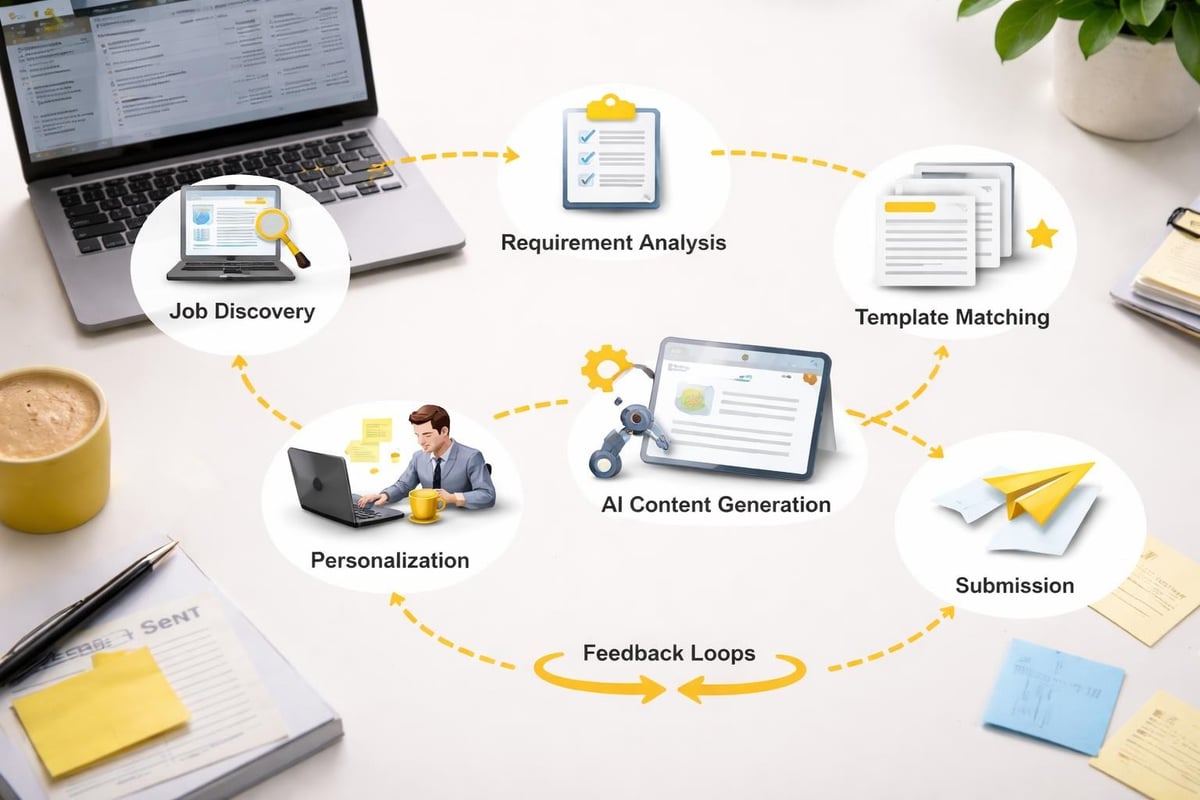
Today's upwork proposal automation platforms incorporate several advanced features:
- AI-powered job analysis that extracts key requirements from client postings
- Automatic template selection based on project type and industry
- Dynamic personalization that adapts proposals to specific client needs
- Integration capabilities with CRM systems and project management tools
- Performance tracking that measures proposal success rates
These capabilities have transformed proposal creation from a time-consuming manual task into a streamlined process requiring minimal human intervention. The automation tools versus manual work comparison highlights the dramatic efficiency gains agencies now experience.
Key Components of Effective Proposal Automation
Successful upwork proposal automation requires more than simply using AI to generate text. Agencies must build a comprehensive system that addresses every aspect of the proposal lifecycle.
Template Library Development
Foundation templates serve as the backbone of any automation system. These templates should cover:
- Project category variations (web development, mobile apps, design, marketing)
- Client size segments (startups, SMBs, enterprises)
- Budget tier approaches (economy, standard, premium)
- Engagement type formats (fixed-price, hourly, retainer)
Creating robust templates requires analyzing historical winning proposals and identifying patterns that resonate with clients. According to best practices for AI proposal automation, templates should balance structure with flexibility to allow personalization.
AI-Powered Proposal Generation
The most effective approach to upwork proposal automation combines template structure with intelligent personalization. GetMany's Cover Letter Builder uses a [[double bracket]] instruction system: write the template once, inserting [[double bracket]] markers where the AI should inject personalized content for each job. The result is a proposal that reads as hand-crafted while taking just 5-10 minutes to generate—compared to 30-60 minutes manually.
This approach yields 8-30% win rates versus the 3-5% industry average for generic proposals, with agencies submitting 50+ proposals weekly without burnout.
| Training Element | Purpose | How It Improves Proposals |
|---|---|---|
| Historical wins | Pattern recognition | Identifies phrasing and approaches that resonate |
| Brand voice samples | Consistency maintenance | Keeps tone aligned across all proposals |
| Industry terminology | Technical credibility | Demonstrates expertise to specialized clients |
| Client feedback data | Continuous improvement | Refines what works based on real outcomes |
The winning proposals strategies guide emphasizes that customization directly correlates with proposal success rates.
Building Your Automation Stack
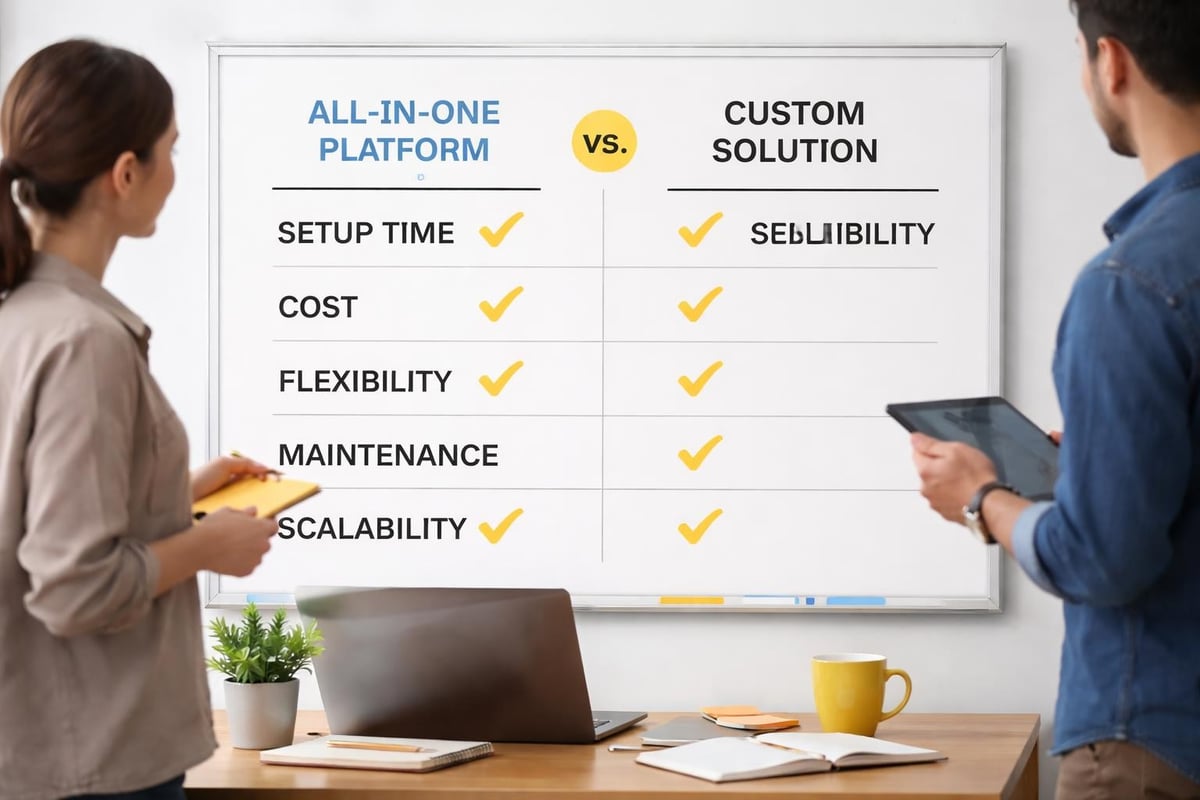
Agencies approaching upwork proposal automation must decide between all-in-one platforms and custom-built solutions using workflow automation tools.
All-in-One Platforms
Dedicated Upwork automation platforms offer the fastest implementation path. These systems provide pre-built integrations with Upwork's API, ready-to-use proposal templates, and analytics dashboards.
Advantages include:
- Immediate deployment without technical expertise
- Regular updates aligned with Upwork platform changes
- Built-in compliance with Upwork's terms of service
- Support teams familiar with freelancing challenges
Custom Workflow Solutions
Some agencies prefer building custom automation using platforms like n8n, Zapier, or Make. This approach offers maximum flexibility but requires more technical investment.
A typical custom workflow includes:
- Job scraping module that monitors Upwork for matching opportunities
- Data extraction layer pulling client requirements and preferences
- AI generation engine creating proposal drafts using GPT-4 or similar models
- Quality control checkpoint for human review before submission
- Submission automation posting proposals at optimal times
The n8n workflow for personalized Upwork proposals demonstrates this approach in practice.
Personalization at Scale
The paradox of upwork proposal automation is that increased volume requires increased personalization to maintain effectiveness. Generic mass-produced proposals get flagged by both clients and Upwork's systems.
Dynamic Content Insertion
Modern automation systems use variable placeholders that populate with client-specific information:
- Company name and industry references
- Specific project requirements mentioned in job descriptions
- Related portfolio items matching the project scope
- Relevant case studies from similar engagements
- Customized timelines based on project complexity
This creates the appearance of individually crafted proposals while maintaining automation efficiency.
Intelligent Matching Algorithms
Advanced platforms analyze job postings against your agency's capabilities to determine fit scores. High-scoring opportunities receive more detailed proposals with additional personalization elements.
| Fit Score Range | Personalization Level | Time Investment | Approach |
|---|---|---|---|
| 90-100% | Maximum custom | 15-20 minutes | Fully personalized with case studies |
| 75-89% | High automation | 8-12 minutes | Template with detailed customization |
| 60-74% | Standard automation | 4-6 minutes | Template with basic personalization |
| Below 60% | Skip or minimal | 2-3 minutes | Assess whether worth pursuing |
This tiered approach ensures you invest the most effort where you have the highest probability of success, as explored in the templates versus personalization comparison.
Compliance and Quality Control
Upwork maintains strict policies regarding automated submissions. Understanding these boundaries is critical for sustainable automation.
Platform Guidelines
Upwork's terms prohibit certain automation practices:
- Bulk identical proposals violate their spam policies
- Bot-generated submissions without human review can trigger account flags
- Automated bidding on every available job appears inauthentic
- Copy-paste templates with no customization get lower visibility
However, using AI assistance for proposal creation remains acceptable when combined with human oversight and genuine personalization.
Quality Assurance Processes
Implementing quality control prevents automation from degrading proposal standards:
- Pre-submission review queues where team members approve AI-generated content
- A/B testing frameworks that measure performance across proposal variations
- Client feedback integration that captures why proposals succeed or fail
- Regular template audits ensuring content stays current and relevant
- Compliance monitoring to catch potential policy violations
The YouNeverSleep automation approach emphasizes balancing efficiency with quality maintenance.
Performance Tracking and Optimization
Upwork proposal automation generates valuable data that informs continuous improvement efforts.
Key Performance Indicators
Essential metrics to monitor include:
- Proposal submission volume per week
- Response rate (client replies to total submissions)
- Interview conversion rate (responses to interview invitations)
- Hire rate (interviews to actual project awards)
- Average time from submission to response
- ROI per proposal (revenue generated versus time invested)
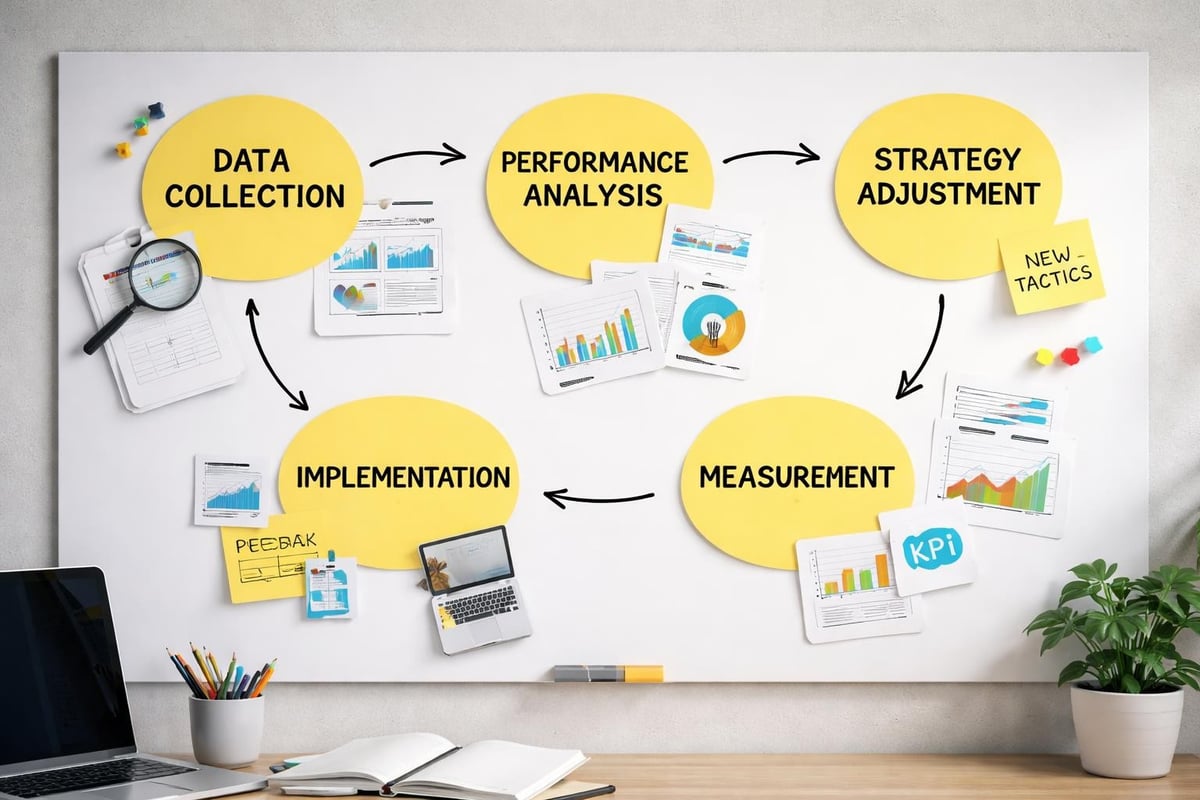
Tracking these metrics reveals patterns about which automation strategies deliver results and which need refinement. GetMany's Analytics Dashboard tracks proposal performance in real time—win rates by template, client engagement metrics, and timeline grouping—making it far faster to identify what works than manual spreadsheets.
Iterative Improvement Cycles
Successful agencies treat upwork proposal automation as an evolving system rather than a set-it-and-forget-it tool. Monthly optimization reviews should analyze:
- Which proposal templates generate the highest response rates
- What personalization elements correlate with interview invitations
- How submission timing affects client engagement
- Which job categories provide the best ROI
- What budget ranges match your agency's sweet spot
This data-driven approach enables agencies to refine their automation parameters continuously, improving results over time.
Integration with Agency Operations
Effective upwork proposal automation extends beyond just creating proposals—it connects with your broader business systems.
CRM and Pipeline Management
Linking automation tools with customer relationship management platforms creates seamless workflows:
- New Upwork leads automatically populate your CRM
- Proposal status updates sync in real-time
- Client communications centralize in one system
- Historical project data informs future proposals
- Team members access complete client context
Speed matters here. GetMany's Auto Reply sends a customized first message the moment a client responds to your proposal—keeping the lead warm even when your team is offline.
London-based agency Acceltor LTD cut their time-to-first-response from 6.5 hours to 1.3 hours after enabling Auto Reply, resulting in a 16% lift in reply rate and 17% more interviews. As founder Talha Naseem put it: "We strive to keep our leads warm, so we've set up an automatic first message, which allows us to stay responsive." In a marketplace where clients often hire the first agency that replies, closing this gap can be the difference between winning a project and losing it to a faster competitor.
This integration prevents information silos and ensures your team operates with complete visibility into the sales pipeline.
Resource Planning and Capacity Management
Smart automation considers your agency's current capacity before submitting proposals. This prevents overcommitment and ensures you only pursue opportunities you can realistically deliver.
Capacity-aware systems check:
- Current team utilization rates
- Upcoming project deadlines
- Planned time off or holidays
- Skill availability for specialized requirements
- Budget availability for subcontractors if needed
The strategies for Upwork agency success emphasize alignment between proposal volume and delivery capacity.
Common Implementation Challenges
Agencies adopting upwork proposal automation frequently encounter predictable obstacles that can derail adoption if not addressed proactively.
Team Resistance and Change Management
Proposal writers may view automation as threatening their roles. Addressing this requires:
- Reframing automation as handling repetitive work, freeing them for strategic tasks
- Involving writers in template creation and system training
- Demonstrating how automation increases their capacity and impact
- Establishing new roles focused on quality control and optimization
Successful transitions emphasize that automation augments human capabilities rather than replacing them.
Maintaining Authenticity
The biggest risk with upwork proposal automation is producing content that feels robotic or impersonal. Clients quickly identify and dismiss obviously automated proposals.
Authenticity preservation strategies:
- Incorporate conversational language patterns in templates
- Reference specific client pain points from job descriptions
- Include relevant questions that demonstrate engagement
- Add personality elements aligned with your brand voice
- Use varied sentence structures and paragraph lengths
Tools like the Upwork Proposal Automation Chrome extension balance automation with personalization features.
Advanced Automation Techniques
Beyond basic proposal generation, sophisticated agencies employ advanced strategies to maximize their competitive advantage.
Competitive Intelligence
Automated systems can monitor competitor activity on Upwork, tracking:
- Which agencies consistently win in your categories
- What pricing strategies top performers use
- How quickly leading agencies submit proposals
- What differentiators appear in successful pitches
- Which portfolio items resonate most with clients
This intelligence informs your own proposal strategy and positioning.
Multi-Channel Coordination
The most effective upwork proposal automation doesn't operate in isolation—it coordinates with other client acquisition channels:
| Channel | Integration Point | Benefit |
|---|---|---|
| Profile optimization with Upwork wins | Stronger credibility signal | |
| Email marketing | Nurture sequences for Upwork inquiries | Higher conversion on warm leads |
| Portfolio sites | Automatic updates with new projects | More client confidence |
| Social proof | Case studies from Upwork success | Stronger positioning |
This creates a cohesive presence that reinforces your expertise across platforms, as detailed in the Upwork versus freelance platforms comparison.
ROI Calculation and Business Impact
Understanding the financial return from upwork proposal automation helps justify the investment and identify optimization opportunities.
Direct Cost Savings
Calculate time savings by comparing pre-automation and post-automation proposal creation:
- Manual process: 30-60 minutes per proposal
- Automated process with AI: 5-10 minutes per proposal (including review)
- Time saved: up to 50 minutes per proposal
- Weekly volume: 40 proposals
- Total weekly savings: 30+ hours
At an average agency billing rate, this reclaimed capacity goes directly into client delivery rather than proposal administration.
Revenue Impact
Beyond cost savings, automation typically increases proposal volume and quality, driving revenue growth:
- Higher proposal volume creates more opportunities
- Faster submission times improve visibility with clients
- Better personalization increases conversion rates
- Consistent quality maintains brand reputation
- Data-driven optimization continuously improves results
Agencies implementing comprehensive automation consistently report that the biggest gain isn't cost savings—it's the ability to pursue more opportunities without hiring additional staff.
Future Trends in Proposal Automation
The upwork proposal automation landscape continues evolving rapidly as AI capabilities advance and agencies develop more sophisticated approaches.
Predictive Analytics
Next-generation systems will predict job posting success probability before submission, analyzing:
- Historical patterns from similar job types
- Client hiring history and preferences
- Budget alignment with your pricing
- Competition level for specific opportunities
- Optimal timing for maximum visibility
This enables even more strategic resource allocation toward the highest-value opportunities.
Deeper Personalization
Future automation will incorporate:
- Voice matching that adapts proposal tone to client communication style
- Visual proposal elements automatically generated to match project aesthetics
- Interactive demonstrations embedded directly in proposals
- Video introduction automation with AI-generated personalized pitches
- Real-time collaboration where clients can interact with proposals dynamically
These innovations will further blur the line between automated efficiency and personalized engagement, as explored in the automation tool picks for 2026.
Building a Sustainable Automation Practice
Long-term success with upwork proposal automation requires treating it as an ongoing practice rather than a one-time implementation.
Continuous Learning Systems
Effective automation platforms learn from every proposal submission:
- Which phrases correlate with positive responses
- What questions prospects ask most frequently
- How budget discussions influence conversion
- Which portfolio pieces generate the most interest
- What objections appear repeatedly
This accumulated knowledge makes your system progressively more effective over time.
Team Development and Training
As automation handles routine tasks, team members need training for higher-value activities:
- Strategic client consultation during discovery calls
- Complex proposal customization for enterprise opportunities
- Performance analysis and optimization recommendations
- Template strategy development and refinement
- Cross-functional collaboration with delivery teams
Investing in these capabilities ensures your team evolves alongside your automation systems, maintaining the human expertise that differentiates your agency from competitors relying purely on technology.
Upwork proposal automation represents a fundamental shift in how agencies approach client acquisition—transforming a time-intensive manual process into a scalable, data-driven operation. By implementing the strategies and tools outlined above, agencies can dramatically increase proposal volume while maintaining or improving quality standards.
GetMany's AI Agency Manager brings this entire workflow together for 300+ agencies worldwide: the Cover Letter Builder generates personalized proposals using [[double bracket]] instructions in 5-10 minutes, Auto Reply keeps leads warm by responding to clients within minutes even when you're offline, and the Analytics Dashboard shows exactly which approaches drive your 8-30% win rates. Agencies save 30+ hours weekly—time that goes directly into client delivery.
Ready to reclaim those hours? Start with GetMany free or book a 20-minute demo to see how agencies like yours are automating their Upwork workflow end to end.